
Description
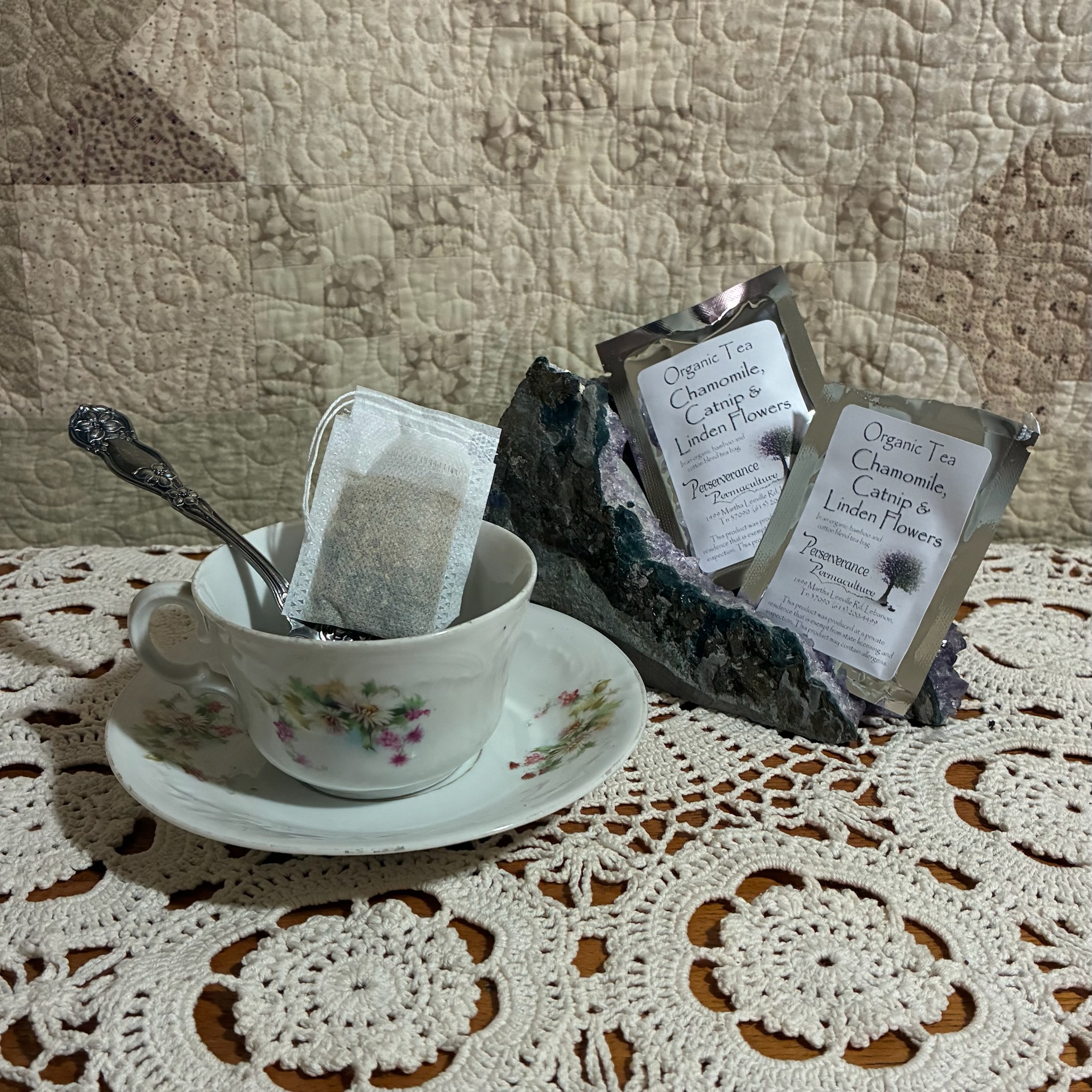
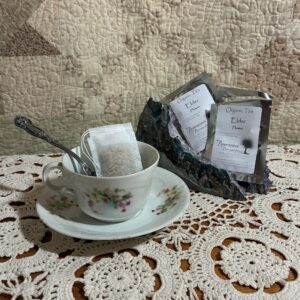
These three ancient herbs (Matricaria chamomilla, Nepeta cataria, Tiliae flos) combine the subtly minty, slightly earthy, and citrus-toned flavor of catnip leaves, with the gentle, apple-like floral notes of chamomile, and a hint of linden flower’s sweet woody flavour. While most people today associate Catnip with energized cats, it has an opposite effect on humans. This calming and relaxing tea is often consumed before bed. Up to 2 cups a day.
Warning: Please consult a healthcare professional before consuming herbs or supplements. This product is not intended for children. This tea should not be consumed by individuals sensitive to the Asteraceae/Compositae or Lamiaceae family, taking blood thinners or sedatives, or are pregnant or nursing. Consumption should be avoided before and after surgery. These herbs are known to cause drowsiness.
Experts say:
Chamomile (Matricaria chamomilla L.)
“Chamomile has a long history of traditional medicinal uses… Chamomile is generally safe for consumption and is consumed as tea or tonic… It is primarily used for the treatment of mild skin irritation and to treat anxiety, inflammation, and spasm or as a sedative. As a drug, it is useful in flatulence, colic, hysteria, intermittent fever, depression, ulcer, and wound healing, etc.” [1]
“Matricaria chamomilla L. is a famous medicinal plant distributed worldwide. It is widely used in traditional medicine to treat all kinds of diseases, including infections, neuropsychiatric, respiratory, gastrointestinal, and liver disorders. The pharmacological activities of M. chamomilla confirm its traditional uses. Indeed, M. chamomilla essential oils and extracts showed interesting antioxidant, antibacterial, antifungal, anticancer, antidiabetic, antiparasitic, anti-inflammatory, anti-depressant, anti-pyretic, anti-allergic, and analgesic activities.” [2]
Catnip (Nepeta cataria L.)
“The plant has been known for its wide range of traditional usages and used to relieve pain, and for the cure of different gastrointestinal and respiratory ailments, female disorders, pneumonia, rheumatism, etc… N. cataria have been a rich source of nepetalactones and related compounds (iridoids), which have been mainly responsible for different biological activities of the plant, viz. cat attractant, antioxidant, hepatoprotective, antidiabetic activities, as well as sedative, antidepressant, spasmolytic, anti-nociceptive and anti-inflammatory activities. Experiments show that this plant influences sexual activity, and expresses anticancer properties. Antimicrobial activity against a number of bacteria is also noted, as well as repellent and insecticidal properties… Further, the toxicological studies of this plant have revealed that the essential oils and different extracts obtained from the plant have mostly been nontoxic in nature.” [3]
Linden Flowers: (Tiliae flos)
“Tilia is a tree used in traditional medicine primarily as a non-narcotic sedative for sleep disorders or anxiety. Flower infusions (teas) of this species have generally been regarded as non-toxic; diluted teas are commonly given to overanxious children as a mild sedative… Tilia is typically taken orally by preparing infusions of its inflorescences.” [4]
“The linden flower (Tiliae flos) has been used for centuries to treat and relieve symptoms of the common cold, throat irritation, and upper respiratory tract disturbances… Based on the presented data, it could be stated that linden flower extract has a beneficial influence on human gut microbiota, leads to the increase in the abundance of bacteria responsible for SCFAs production, which are necessary for the proper function of human organism.” [5]
Sources:
- Sah A, Naseef PP, Kuruniyan MS, Jain GK, Zakir F, Aggarwal G. A Comprehensive Study of Therapeutic Applications of Chamomile. Pharmaceuticals (Basel). 2022 Oct 19;15(10):1284. doi: 10.3390/ph15101284. PMID: 36297396; PMCID: PMC9611340.
- El Mihyaoui A, Esteves da Silva JCG, Charfi S, Candela Castillo ME, Lamarti A, Arnao MB. Chamomile (Matricaria chamomilla L.): A Review of Ethnomedicinal Use, Phytochemistry and Pharmacological Uses. Life (Basel). 2022 Mar 25;12(4):479. doi: 10.3390/life12040479. PMID: 35454969; PMCID: PMC9032859.
- Fazil, Halo, and Omji Porwal. “Catnip (Nepeta cataria L.): Recent advances in pharmacognosy, cultivation, chemical composition and biological activity.” Journal of Drug Delivery & Therapeutics 12, no. 4-S (2022): 254-263.
- Pérez-Ortega, P. Guevara-Fefer, M. Chávez, J. Herrera, A. Martínez, A.L. Martínez, M.E. González-Trujano, Sedative and anxiolytic efficacy of Tilia americana var. mexicana inflorescences used traditionally by communities of State of Michoacan, Mexico, Journal of Ethnopharmacology, Volume 116, Issue 3, 2008, Pages 461-468, ISSN 0378-8741
- Kruk A, Granica S, Popowski D, Malinowska N, Piwowarski JP. Tiliae flos metabolites and their beneficial influence on human gut microbiota biodiversity ex vivo. J Ethnopharmacol. 2022 Aug 10;294:115355. doi: 10.1016/j.jep.2022.115355. Epub 2022 May 10. PMID: 35537603.
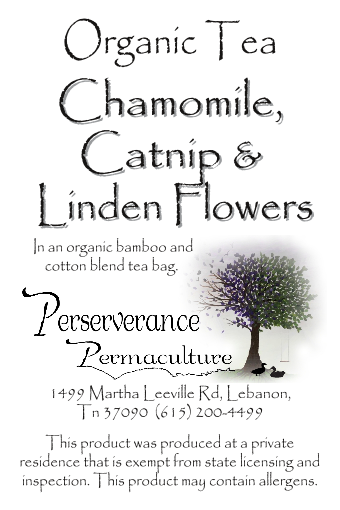
“This product was produced at a private residence that is exempt from state licensing and inspection. This product may contain allergens.” T.C.A. § 53-1-118
Reviews
There are no reviews yet.