
Description
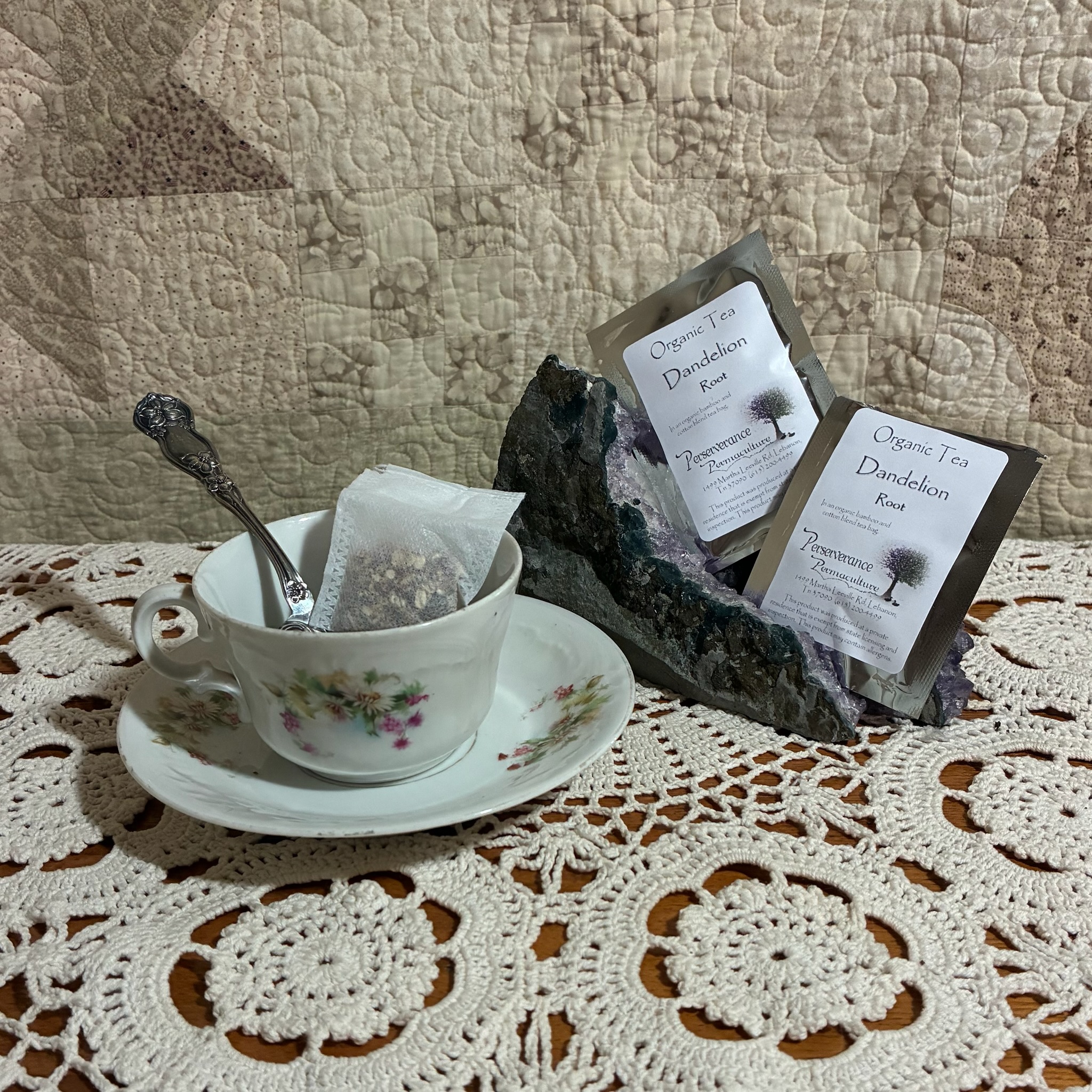
Dandelion Root tea offers a rich, full-bodied, earthy flavor. Sometimes it’s described as a mildly nutty taste with a slightly bitter undertone. This tea is considered a daily tea, up to 2 cups per day.
Warning: Please consult a healthcare professional before consuming herbs or supplements. This product is not intended for children. This tea should not be consumed by individuals sensitive to the Asteraceae/Compositae family, taking antibiotics, blood thinners, lithium, diuretics, diabetes medications, those pregnant or nursing. Individuals with a history of kidney and gallbladder problems should use caution due to the high potassium content.
Experts say:
“Although dandelion is mainly known for its medicinal properties, it has for many years been successfully used worldwide in the food industry as an entirely non-toxic and edible plant; indeed, the U.S. Food and Drug Administration has placed dandelion on the list of safe products for people with rare allergies.” [1]
“Multiple pharmacological studies have highlighted its therapeutic potential, including anti-bacterial, anti-oxidant, anti-cancer, and anti-rheumatic activities… Taraxacum genus as a drug was first used to treat liver and spleen diseases in Arabian medicine. In the 16th century, the German botanist Fuchs discovered that Taraxacum can be used to treat gout, diarrhea, blisters, and spleen and liver diseases. It has been used as a common drug for detoxification, swelling, and lactation since the 16th century in China.
Since the 19th century, several authors have relied on the existing traditional knowledge to provide scientific explanations about how Taraxacum works on diseases and their symptoms. Taraxacum can be used as diuretics, antioxidants, bile agents, anti-inflammatory, analgesic, and anti-cancer agents. Corresponding studies in the 20th century revealed that Taraxacum can be used medicinally, while its inflorescences, leaves, and roots can be processed into different foods. For example, the leaves of cultivated or wild Taraxacum species can be eaten in salads, while roots are baked and used as a coffee substitute. Additionally, the Taraxacum leaf extract can be used as a flavoring agent for various foods, including alcoholic and soft drinks, frozen dairy desserts, candies, baked goods, pudding, and cheese.” [2]
Sources:
- Olas B. New Perspectives on the Effect of Dandelion, Its Food Products and Other Preparations on the Cardiovascular System and Its Diseases. Nutrients. 2022 Mar 24;14(7):1350. doi: 10.3390/nu14071350. PMID: 35405963; PMCID: PMC9002813.
- Fan M, Zhang X, Song H, Zhang Y. Dandelion (Taraxacum Genus): A Review of Chemical Constituents and Pharmacological Effects. Molecules. 2023 Jun 27;28(13):5022. doi: 10.3390/molecules28135022. PMID: 37446683; PMCID: PMC10343869.
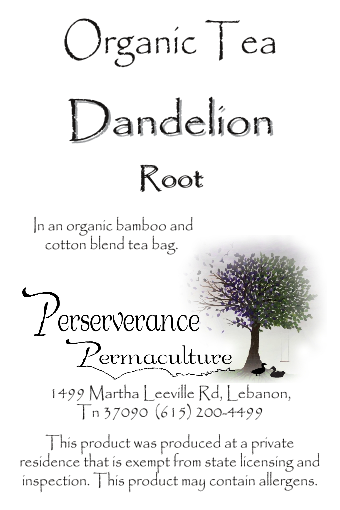
“This product was produced at a private residence that is exempt from state licensing and inspection. This product may contain allergens.” T.C.A. § 53-1-118
Reviews
There are no reviews yet.