
Description
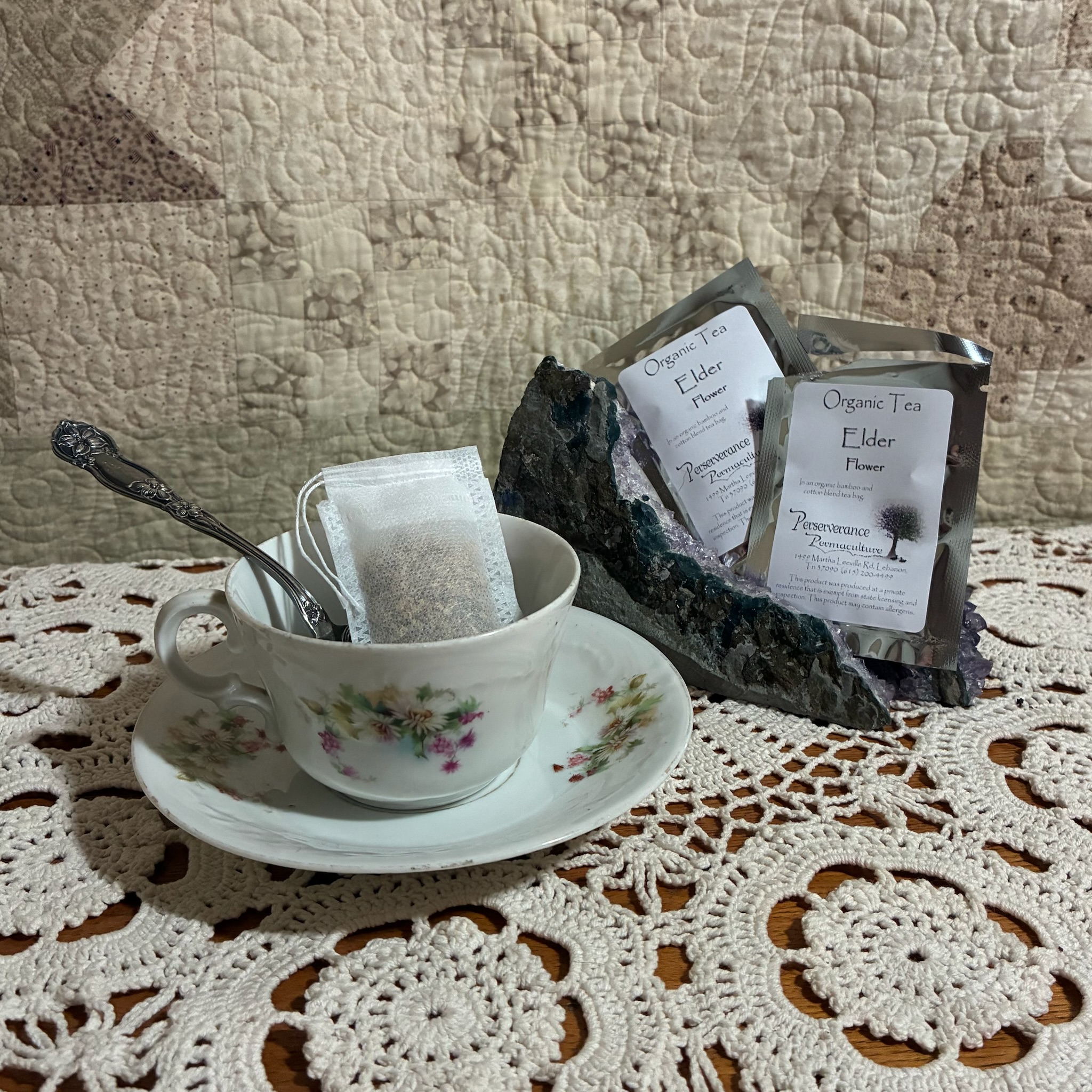
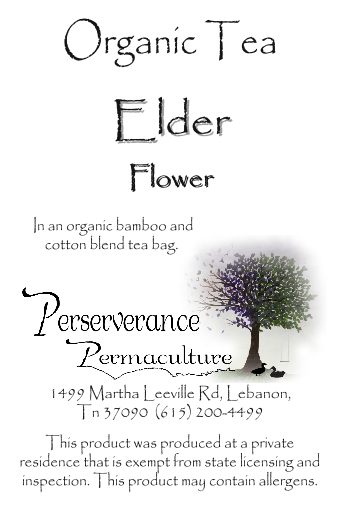
Elderflower (sambucus nigra) tea has a light, uniquely fresh, and subtly sweet flavor, often described as ‘a hint of apricot and white grape with a faint almost honey-like base”. It is lightly floral (but not perfumed) with a slight grassy undertone making a healthy and savory tea. This tea is generally consumed as needed, once daily.
Warning: Please consult a healthcare professional before consuming herbs or supplements. This product is not intended for children. This tea should not be consumed by individuals who are pregnant or nursing, taking blood pressure, diabetic, chemotherapy or immunosuppressing medications.
Experts say:
“S. nigra has been subjected of enormous interest, and several studies involving this plant showed huge benefits of leaves, flower and fruit to human health. Our results suggest that S. nigra flowers are a valuable source for the intake of beneficial fatty acids in humans’ diets if used as nutrient sources in food products. Furthermore, some of the identified fatty acids can be used for medical applications, such as in the treatment of dermatitis, diabetes, and inflammatory diseases. S. nigra flowers have a great potential as a good source of low-cost natural antioxidants with low cytotoxicity.” [1]
“Elderberry also has a number of health benefits both in vivo and in vitro, including antioxidant, anti-inflammatory, anti-cancer, anti-influenza, antibacterial, antidiabetic, cardiovascular protective, and neuroprotective properties. Elderberry has been used in folk medicine for centuries to treat influenza, colds and sinusitis, and has been reported to have antiviral activity against influenza and herpes simplex. Numerous research’ findings point to the elderberry’s favourable benefits on blood pressure, oxidative stress reduction, increased blood plasma antioxidant enzyme activity, including glutathione (gsh), and uric acid (ua) level reduction. Elderberry is most frequently ingested in processed form, eating young plants or large quantities of fruits may make you sick to your stomach and make you dizzy and nauseated. Consuming fruits heated during processing does not result in poisoning symptoms since thermal processing of raw materials causes sambunigrin to decay.” [2]
Sources:
- Ferreira-Santos P, Badim H, Salvador ÂC, Silvestre AJD, Santos SAO, Rocha SM, Sousa AM, Pereira MO, Wilson CP, Rocha CMR, Teixeira JA, Botelho CM. Chemical Characterization of Sambucus nigra L. Flowers Aqueous Extract and Its Biological Implications. Biomolecules. 2021 Aug 17;11(8):1222. doi: 10.3390/biom11081222. PMID: 34439888; PMCID: PMC8391949.
- Ulbricht c, basch e, cheung l, goldberg h, hammerness p, isaac r, et al. An evidence-based systematic review of elderberry and elderflower (sambucus nigra) by the natural standard research collaboration. J diet suppl 2014;11:80-120.
“This product was produced at a private residence that is exempt from state licensing and inspection. This product may contain allergens.” T.C.A. § 53-1-118
Reviews
There are no reviews yet.