Description
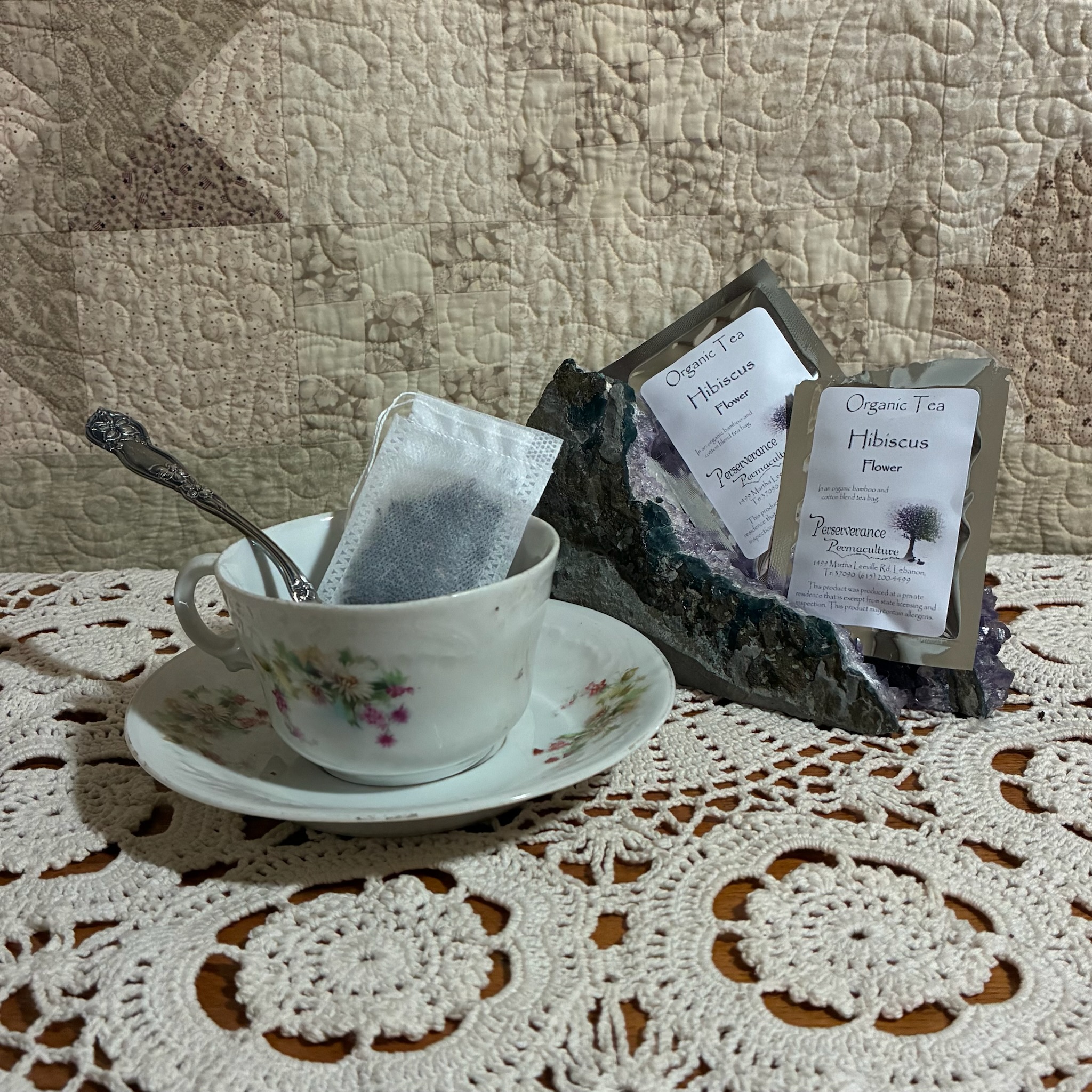
Hibiscus tea (Hibiscus sabdariffa), also known as Roselle tea, is known for its bold tart and tangy flavor. This tea is often consumed daily, up to 3 cups a day.
Warning: Please consult a healthcare professional before consuming herbs or supplements. This product is not intended for children. This tea should not be consumed by individuals taking blood pressure or diabetic medication and those pregnant or nursing. Consumption should be avoided before and after surgery. **Nut Allergy: this plant is grown alongside plants in the nut family.
Experts say:
“Hs has been widely used in local medicines. In India, Africa and Mexico, infusions of the leaves or calyces (flower parts) are traditionally used for their diuretic, cholerectic, febrifugal and hypotensive effects, decreasing the viscosity of the blood and stimulating intestinal peristalsis. It is also recommended as a hypotensive in Senegal. In Egypt, preparations from the calyces have been used to treat cardiac and nerve diseases and also to increase the production of urine (diuresis)… In North Africa, calyces preparations are used to treat sore throats and coughs, as well as genital problems… In Chinese folk medicine, it is used to treat liver disorders and high blood pressure. In Iran, sour hibiscus tea is reportedly a traditional treatment for hypertension…” [1]
Sources:
- Inês Da-Costa-Rocha, Bernd Bonnlaender, Hartwig Sievers, Ivo Pischel, Michael Heinrich, Hibiscus sabdariffa L. – A phytochemical and pharmacological review, Food Chemistry, Volume 165, 2014, Pages 424-443, ISSN 0308-8146
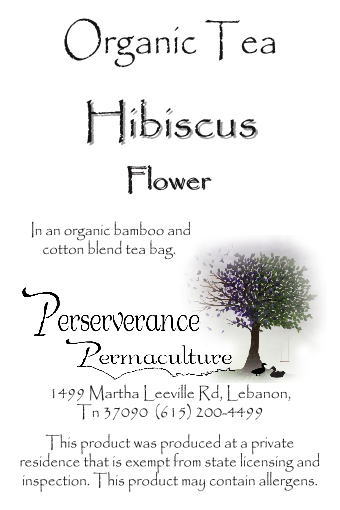
“This product was produced at a private residence that is exempt from state licensing and inspection. This product may contain allergens.” T.C.A. § 53-1-118
Reviews
There are no reviews yet.