Description
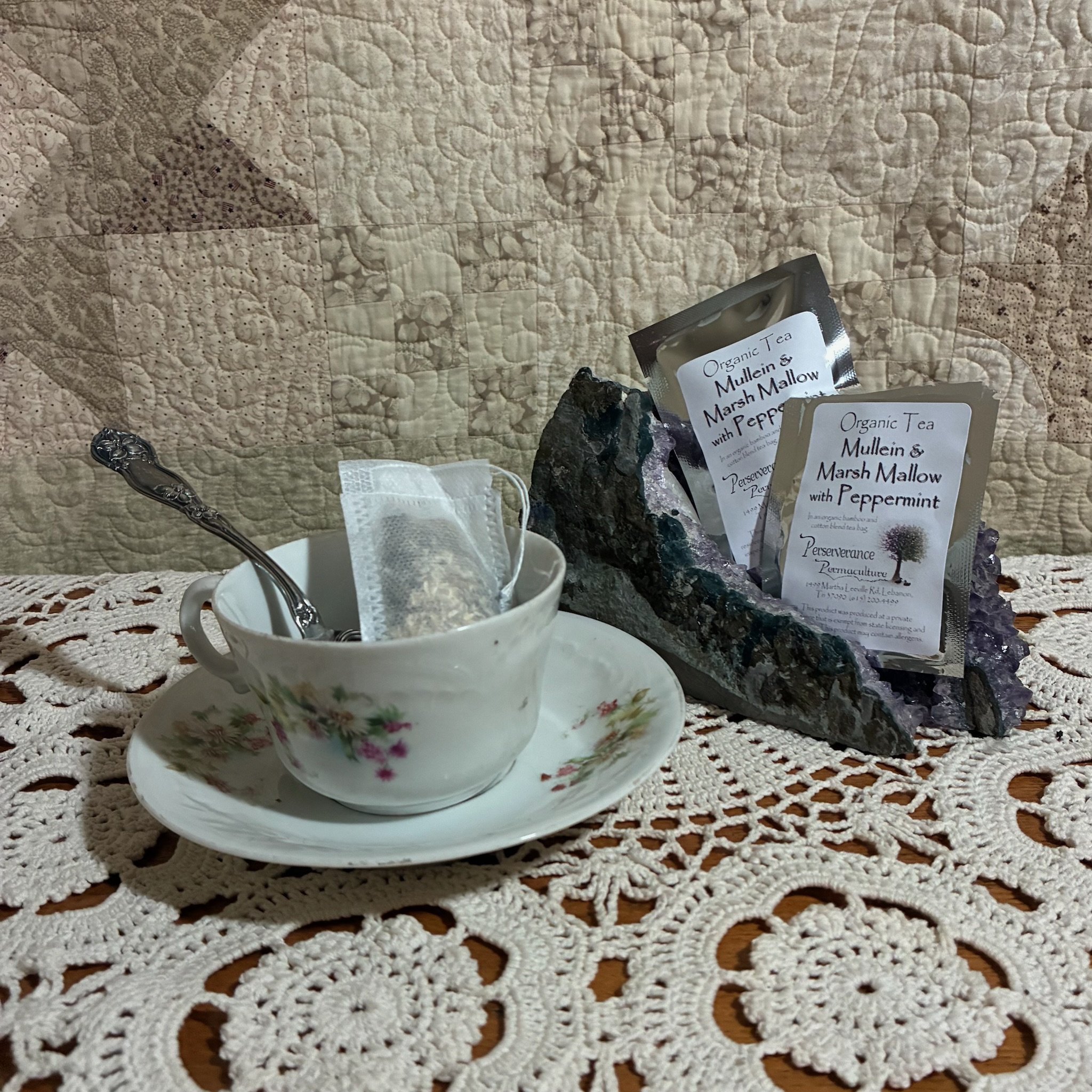
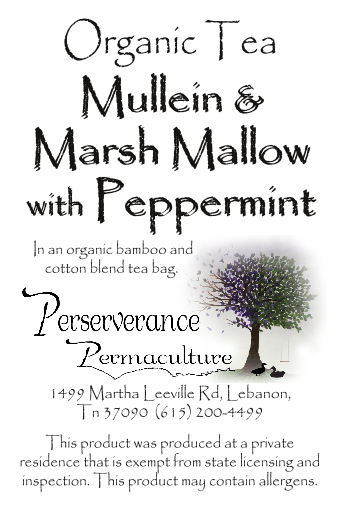
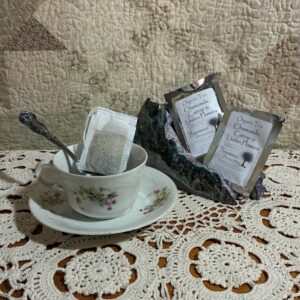
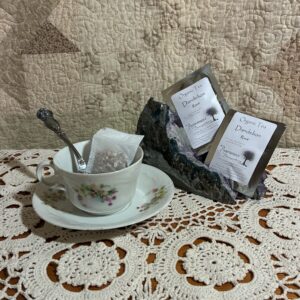
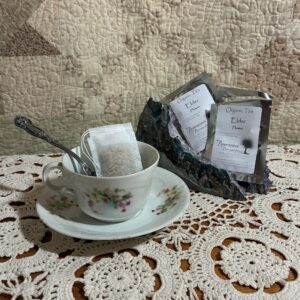
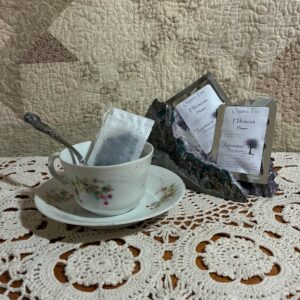
Mullein & Marsh Mallow root with Peppermint tea has a complex yet pleasant flavor. The Mullein leaves give it an earthy base, while the Marsh Mallow undertone gives it a delicious warmth, and the uplifting touch of Peppermint brings the trio of flavors together harmoniously. This tea is generally consumed when needed, up to 3 cups in a day.
Warning: Please consult a healthcare professional before consuming herbs or supplements. This product is not intended for children. It should not be consumed by individuals sensitive to the Lamiaceae or figwort families, those with bleeding disorders, or taking cyclosporine, felodipine, simvastatin, antacids, blood thinners or diuretic medication. Marsh Mallow root can lessen the absorption of other medications taken within 2 hours of consumption, may lower blood sugar levels and can interfere with lithium expulsion. Consumption should be avoided before and after surgery and while pregnant or nursing.
Experts say:
Mullein (Verbascum thapsus L.)
“Common Mullein (Verbascum thapsus L.), a member of the figwort family, is a medicinal plant that has been used for the treatment of inflammatory diseases, asthma, spasmodic coughs, diarrhea and other pulmonary problems.” [1]
“ A number of pharmacological activities such as anti-inflammatory, antioxidant, anticancer, antimicrobial, antiviral, antihepatotoxic and anti-hyperlipidemic activity have been ascribed to this plant… The momentous pharmacological activities of V. thapsus are cure and prevention of various diseases and improvement from diseases such as cancer, stroke and heart diseases.” [2]
Marsh Mallow (Althaea officinalis)
“Althaea officinalis, a well-known traditional herbal plant, is readily available and widely used.
… the plant’s various pharmacological properties, such as its ability to alleviate coughs, reduce inflammation, provide antioxidant effects, fight against bacterial infections, and promote wound healing… Althaea officinalis root has been utilized to treat various conditions such as irritation of the mouth and throat mucosa, dry cough, mild gastritis, skin burns, insect bites, catarrh, ulcers, abscesses, constipation, and diarrhea. Modern pharmacological studies have shown that Althaea officinalis possesses properties such as antitussive, antioxidant, anti-inflammatory, antibacterial, and wound-healing effects.” [3]
“A. officinalis is widely used in the irritation of oral, pharyngeal mucosa and associated drycough, mild gastritis, skin burns and for insect bites. It is also used in catarrh of the mouth, throat, gastrointestinal tract and urinary tract, as well as for inflammation, ulcers, abscesses, burns, constipation and diarrhea… It was used traditionally as expectorant, cooling, diuretic, expextorant, and emmenagogue… The roots are used in the treatment of ulcers. Flowers as well as roots are used in the treatment of inflammation of the kidneys and the uterus.” [4]
Peppermint (menta x peperita)
“Peppermint (menta x peperita) is largely considered the most medicinal and widely used plant in the mint genus. Mint has been used medicinally all over the world, with documented use dating back to 1800 BC.” [5]
“Efficacy as an antineoplastic, anti-microbial, anti-viral, anti-radiation, anti-oxidant as well as anti-inflammatory. Peppermint leaf is used mainly to treat Upper G.I tract diseases, respiratory tract problems, irritable bowel syndrome (IBS), nausea, hepatotoxicity, diabetes… Peppermint helps to prevent the interaction between corona virus (Covid-19) and the host body by inhibiting the formation of receptor complex of viral spike protein and ACE2 receptors of the host body… peppermint is generally safe for all age –groups, but intake of large volume can cause heart burn and gastroesophageal reflux disease (GERD).” [6]
Sources:
- Turker AU, Camper ND. Biological activity of common mullein, a medicinal plant. J Ethnopharmacol. 2002 Oct;82(2-3):117-25. doi: 10.1016/s0378-8741(02)00186-1. PMID: 12241986.
- Muhammad Riaz, Muhammad Zia-Ul-Haq, Hawa Z.E. Jaafar, Common mullein, pharmacological and chemical aspects, Revista Brasileira de Farmacognosia, Volume 23, Issue 6, 2013, Pages 948-959, ISSN 0102-695X
- Baiken B, Amankeldi S, Irina R, Saltanat O, Erik S, Gul B, Alma A, Zaru K, Nurgali R, Zhalgaskali A, Zere Z, Akzharkyn S, Aknur T. Phytochemical compounds and biomedical properties of Althaea officinalis. Pharmacy Practice 2025 Jul-Sep;23(3):3153.
- Al-Snafi, Ali. (2013). The Pharmaceutical importance of Althaea officinalis and Althaea rosea: A review. International Journal of PharmTech Research. 5. 1378-1385.
- Silva H. A Descriptive Overview of the Medical Uses Given to Mentha Aromatic Herbs throughout History. Biology (Basel). 2020 Dec 21;9(12):484. doi: 10.3390/biology9120484. PMID: 33371310; PMCID: PMC7767097.
- Chakraborty, Kousani, Anindita Ray Chakravarti and Satarupa Bhattacharjee. “Bioactive components of peppermint (Mentha piperita L.), their pharmacological and ameliorative potential and ethnomedicinal benefits: A review.” Journal of Pharmacognosy andPhytochemistry (2022): n. Pag.
“This product was produced at a private residence that is exempt from state licensing and inspection. This product may contain allergens.” T.C.A. § 53-1-118
Reviews
There are no reviews yet.