
Description
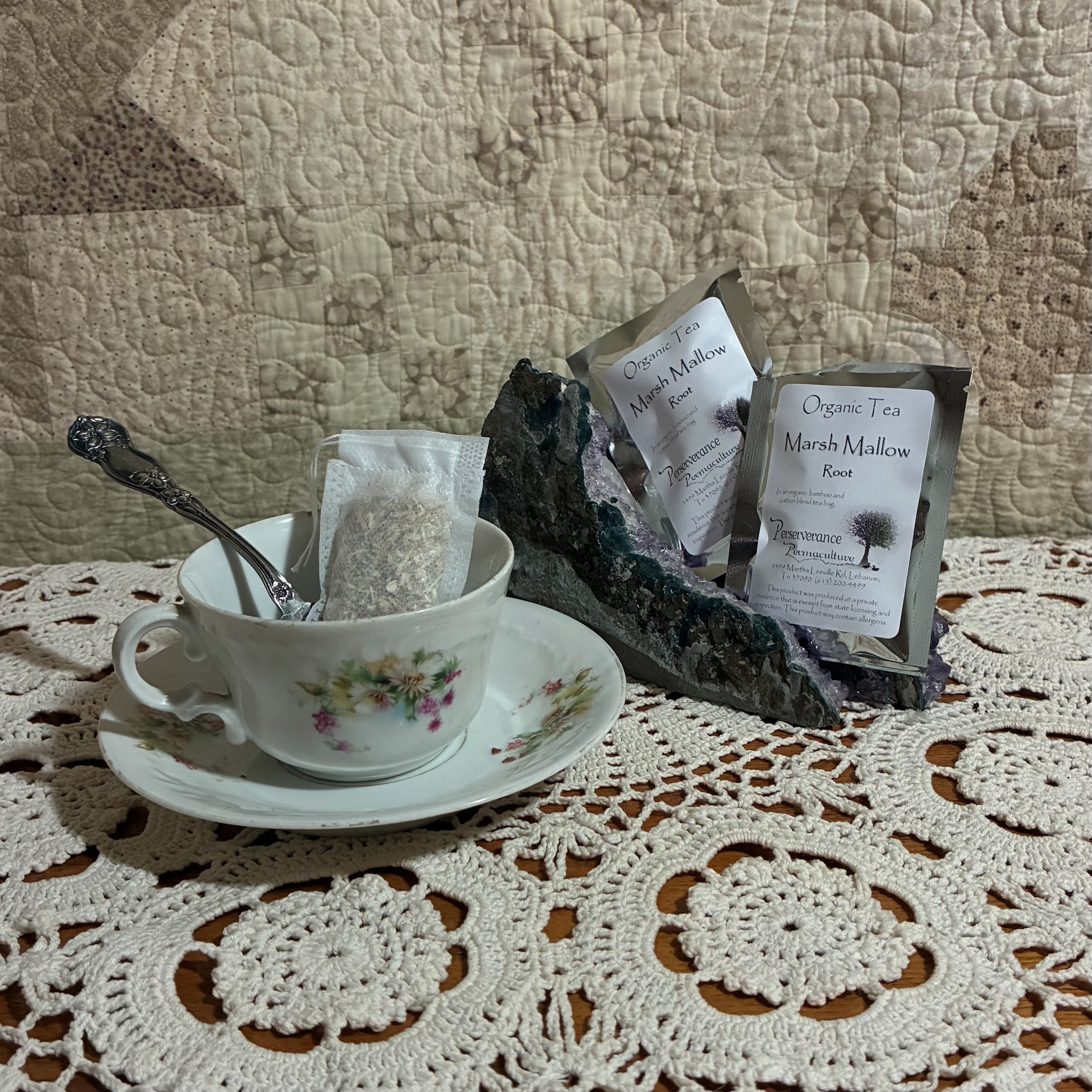
Marsh Mallow root tea is a soothing, mildly earthy tea with it’s expected marshmallow flavored undertone. While the sugary puffed marshmallows you buy at the grocery store no longer contain the wonderful herbal root of the Marsh Mallow plant, it was the roots that gave us the original marshmallows in ancient Egypt. Marshmallow root tea can be consumed anytime or as needed, up to 3 cups a day.
Warning: Please consult a healthcare professional before consuming herbs or supplements. This product is not intended for children. Marsh Mallow root can lessen the absorption of other medications taken within 2 hours of consumption, and may lower blood sugar levels. It should not be consumed by individuals with bleeding disorders and can interfere with lithium expulsion. Consumption should be avoided before and after surgery and while pregnant or nursing. **
Experts say:
“Althaea officinalis, a well-known traditional herbal plant, is readily available and widely used.
… the plant’s various pharmacological properties, such as its ability to alleviate coughs, reduce inflammation, provide antioxidant effects, fight against bacterial infections, and promote wound healing… Althaea officinalis root has been utilized to treat various conditions such as irritation of the mouth and throat mucosa, dry cough, mild gastritis, skin burns, insect bites, catarrh, ulcers, abscesses, constipation, and diarrhea. Modern pharmacological studies have shown that Althaea officinalis possesses properties such as antitussive, antioxidant, anti-inflammatory, antibacterial, and wound-healing effects.” [1]
“A. officinalis is widely used in the irritation of oral, pharyngeal mucosa and associated drycough, mild gastritis, skin burns and for insect bites. It is also used in catarrh of the mouth, throat, gastrointestinal tract and urinary tract, as well as for inflammation, ulcers, abscesses, burns, constipation and diarrhea… It was used traditionally as expectorant, cooling, diuretic, expextorant, and emmenagogue… The roots are used in the treatment of ulcers. Flowers as well as roots are used in the treatment of inflammation of the kidneys and the uterus.” [2]
Sources:
- Baiken B, Amankeldi S, Irina R, Saltanat O, Erik S, Gul B, Alma A, Zaru K, Nurgali R, Zhalgaskali A, Zere Z, Akzharkyn S, Aknur T. Phytochemical compounds and biomedical properties of Althaea officinalis. Pharmacy Practice 2025 Jul-Sep;23(3):3153.
- Al-Snafi, Ali. (2013). The Pharmaceutical importance of Althaea officinalis and Althaea rosea: A review. International Journal of PharmTech Research. 5. 1378-1385.
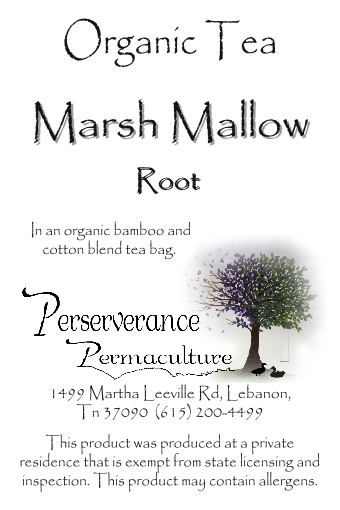
“This product was produced at a private residence that is exempt from state licensing and inspection. This product may contain allergens.” T.C.A. § 53-1-118


Reviews
There are no reviews yet.